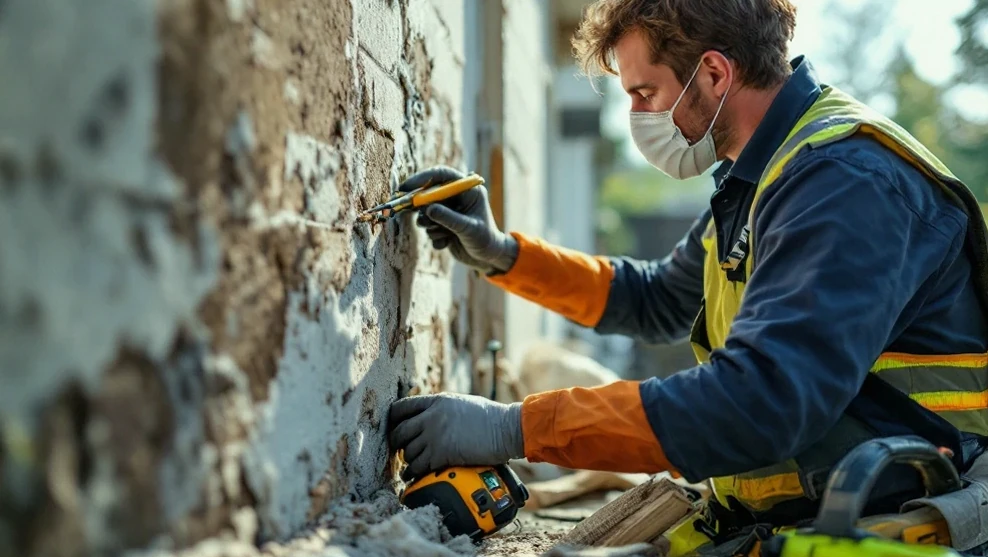
How does Mold Testing work?
Mold testing in Birmingham starts with a visual inspection of your home, followed by air and surface sampling to identify mold types and spore levels. Samples go to a lab, and you get a report with findings and recommendations.
A certified mold inspector walks through your whole house, not just the spot you see mold. They check attics, crawlspaces, around windows, under sinks, and behind baseboards. In Birmingham's humid climate, moisture hides in places you'd never think to look, like the back of a closet on an exterior wall.
After the visual check, the inspector takes air samples. They use a pump that pulls a measured volume of air through a cassette that catches spores. One sample goes outside as a baseline, and one or more come from inside the house. The outside sample tells the lab what's normal for your neighborhood so they can compare it to what's growing inside.
Surface sampling happens too. The inspector might tape lift a patch of visible mold or swab an area that looks suspicious. This tells you exactly what species you're dealing with. Some molds, like Stachybotrys (black mold), need specific handling because they produce mycotoxins. Others, like Cladosporium, are common allergens but not as dangerous.
All samples go to a lab that specializes in mold analysis. Results usually come back in 2 to 4 days. The report lists spore counts per cubic meter for each species and compares indoor levels to outdoor levels. If indoor counts are way higher than outdoor, you have a problem that needs fixing.
The report also gives a recommendation. Sometimes it's just cleaning and fixing a leak. Other times it means full removal with containment and HEPA vacuuming. The testing company does not do the removal, so there is no conflict of interest. You get an honest assessment you can take to any contractor.
One thing Birmingham homeowners often get wrong: they think mold testing is only for visible mold. But the real value is finding hidden growth. Musty smells, allergy symptoms that get worse indoors, or a recent water leak are all good reasons to test even if you see nothing.
Step-by-step: what to expect
A mold test in Birmingham takes about 2 to 4 hours for a typical home. The inspector arrives, does a visual inspection, collects air and surface samples, and explains the process. You get lab results a few days later.
The inspector starts by asking about your home's history. When did you first notice the smell or stain? Any recent plumbing leaks, roof leaks, or flooding? In Birmingham, heavy spring rains and summer storms often cause water intrusion that homeowners don't catch until mold shows up months later.
Next comes the walkthrough. The inspector opens every closet, looks behind furniture, and checks the HVAC system. They pay special attention to the air handler and ductwork because mold in the HVAC spreads spores through the whole house. They also look at the condensate drain line, which clogs often in humid weather.
During the walkthrough, the inspector uses a moisture meter to check drywall, wood, and flooring. If a wall reads damp but looks fine, they may drill a small hole to see what's behind it. This is common around windows in older Birmingham homes where the seal has failed but the stain hasn't bled through yet.
Air sampling happens after the walkthrough. The inspector sets up the pump in the room with the suspected problem, runs it for 5 to 10 minutes, and marks the cassette for the lab. They take a baseline sample outside, away from any obvious mold sources like a compost pile or damp soil.
Surface samples come next. For visible mold, the inspector presses clear tape against it and places the tape on a slide. For hidden mold, they might cut a small piece of material or use a swab. Each sample goes into a sealed bag labeled with the location and date.
Before leaving, the inspector reviews what they found and what the lab will look for. They might recommend temporary steps like running a dehumidifier or fixing a dripping pipe. But they won't give a final plan until the lab report comes back. That report is your roadmap for what to do next.
How long does Mold Testing take?
The on-site part of mold testing in Birmingham takes 2 to 4 hours for a typical home. Lab results arrive in 2 to 4 days. Total time from booking to final report is usually under a week.
A 1,500 square foot ranch house with no crawlspace might take just over an hour. A two story house with a basement and attic can take three hours or more. The inspector has to check every room, every closet, and every potential moisture source. Rushing that part means missing something.
The pump for air sampling runs for a set time, usually 5 to 10 minutes per sample. That part is quick. What takes time is the visual inspection and moisture mapping. The inspector moves methodically because a single missed wet spot can mean mold regrows after removal.
Lab turnaround depends on the lab's workload. In Birmingham, samples often go to labs in Atlanta or Nashville. During the rainy season, labs get backed up and results can take a full week. Winter is usually faster, 2 to 3 days.
One thing that slows things down: if the inspector finds a major problem during the walkthrough, they may recommend additional samples. Crawlspace mold, for example, often requires a separate air sample in the crawlspace and another in the living space above it. That adds time on site and at the lab.
You do not need to be home for the whole test, but it helps. The inspector may have questions about water history or areas you notice smells. If you cannot be there, leave a note with contact info and a brief history of any leaks or issues.
Once the report comes back, the testing company will walk you through it over the phone or email. They explain what the numbers mean and whether removal is needed. That call usually takes 15 to 30 minutes. After that, you have a clear plan.
Common questions about the Mold Testing process
Frequently Asked Questions
Do I need mold testing if I can see mold?
Yes. Visible mold tells you there is a problem, but it does not tell you the species or how far it has spread. Testing identifies the type of mold and measures spore levels in the air. That information determines whether you can clean it yourself or need professional removal.
How much does mold testing cost in Birmingham?
Mold testing costs vary by home size and number of samples. A typical test for a single family home runs from $300 to $600. Larger homes or homes with multiple problem areas cost more because more samples are needed. The only way to get an exact price is a free on site quote.
Will my homeowners insurance cover mold testing?
Most policies cover testing if the mold is caused by a covered water loss, like a burst pipe or storm damage. But they usually exclude testing for mold from long term humidity or maintenance issues. Check with your agent before scheduling. If the testing is covered, the insurance company may require you to use an approved inspector.
Can I do mold testing myself with a kit from the hardware store?
You can, but the results are often misleading. DIY kits do not control for air volume or contamination, so spore counts can be wildly inaccurate. They also do not include a baseline outdoor sample. A professional test costs more but gives you reliable data you can use to make decisions.
How soon after a water leak should I test for mold?
Test as soon as you notice a musty smell or within a week of drying out the leak. Mold can start growing in 24 to 48 hours in Birmingham's humidity. Early testing catches it before spores spread through the HVAC system.
What if the test finds no mold but I still smell something?
A smell without detectable mold spores can mean the source is hidden, like inside a wall cavity or under a tile floor. The inspector may recommend a more targeted test, like drilling a small hole and sampling the air inside the wall. It can also mean the smell is from bacteria or a chemical source, not mold.
How long does it take to get mold test results?
Lab results usually arrive in 2 to 4 days. During Birmingham's rainy spring, labs can be slower, sometimes taking a full week. The testing company will call or email you as soon as the report is ready.
Do I need to leave my house during mold testing?
No. The testing process is non invasive and safe. The inspector uses a pump and cassettes that do not disturb mold or release spores. You can go about your day. Just keep pets and children away from the sampling area while the pump is running.
What does the lab report actually tell me?
The report lists each species of mold found, the spore count per cubic meter for each sample, and a comparison to the outdoor baseline. High indoor counts relative to outdoor indicate a problem. The report also notes any species that require professional removal, like Stachybotrys or Aspergillus.
Will mold testing tell me how to fix the problem?
The testing company will give you a recommendation based on the lab results. That may include cleaning, fixing the moisture source, or full removal. They do not do the removal themselves, so the advice is unbiased. You can take the report to any qualified contractor.
Need mold testing in Birmingham? Get a free estimate today.
📞 256-305-1456