What is Air Quality Spore Sampling and how does it work?
Air quality spore sampling measures the concentration of mold spores floating in your indoor air compared to the air outside. It tells you if you have a hidden mold problem, even when you can't see it.
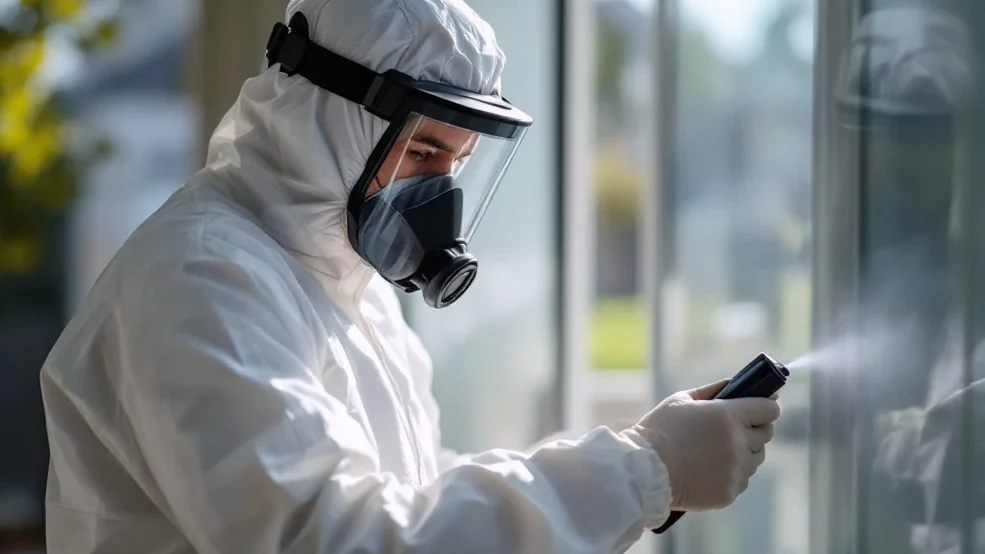
Think of it as a blood test for your home's air. A certified technician uses a special pump that pulls a measured volume of air through a small cassette. Inside that cassette is a sticky slide that catches every mold spore, dust particle, and fragment that passes through. The pump runs for about five to ten minutes per sample, usually in the main living area and in one or two bedrooms. Another sample is taken outside, on your porch or deck, to get a baseline of what's normal for Birmingham on that day.
The outside sample is the key. Birmingham's air is naturally full of mold spores year round, especially after a wet spring or during our humid summers. If your indoor sample has the same types and roughly the same number of spores as the outdoor sample, your home's air is probably fine. But if the indoor count is two, three, or ten times higher than outside, and especially if you see types like Stachybotrys (black mold) or Chaetomium that don't normally show up outdoors, you have a problem that needs fixing.
The samples get sent to a lab that's accredited by the AIHA (American Industrial Hygiene Association). The lab analysts look at the slides under a microscope. They count every spore, identify the genus of each one, and report the results as spores per cubic meter of air. You get a report that lists each mold type, the raw count, and how it compares to the outdoor reference. That report is the hard evidence you need to decide what to do next.
This is not a DIY project. The pumps have to be calibrated to pull exactly 15 liters of air per minute. The cassettes have to be handled carefully so they don't get contaminated by your own skin or breath. And the placement matters: you don't sample right next to an open window, a supply vent, or a known mold patch, because that would skew the results. A trained inspector knows where to put the pump to get a representative sample of the whole house.
The whole visit usually takes about an hour for a typical 2,000 square foot home. The lab takes another two to three business days to process the samples and send back the report. So from start to finish, you have answers in about a week.
How Air Quality Spore Sampling works, step by step
A technician visits your home, runs calibrated pumps in key rooms and outside, then sends the cassettes to a lab. The lab counts and identifies every mold spore, and you get a side by side comparison of indoor versus outdoor air.
Step one is the walkthrough. Before any pump runs, the inspector walks every room with you. They look for visible mold, water stains, peeling paint, musty smells, and any history of leaks. They also check the HVAC system, the attic, and the crawl space if you have one. This walkthrough decides where the samples will go. A bedroom with a musty closet gets a sample. A finished basement that flooded two years ago gets one too. The outdoor sample goes on the north side of the house, away from the AC unit and any obvious mold sources.
Step two is the actual sampling. The inspector sets up the pump on a tripod about four feet off the floor, roughly breathing height. They insert a fresh, sterile cassette, turn the pump on, and let it run for exactly five minutes. The pump draws air at 15 liters per minute, so each sample represents 75 liters of air. For a larger home or if there's heavy dust, the inspector might run two samples in the same room to make sure they catch a representative snapshot.
Step three is the lab analysis. The cassettes go into a sealed bag with a chain of custody form. That form records who took the sample, where, when, and what the conditions were (temperature, humidity, weather). The lab logs the sample, mounts the slide, and a certified analyst counts every spore under 400x to 1000x magnification. They identify each spore to the genus level, which is specific enough for a homeowner to act on. You don't need the species name to know that high levels of Penicillium or Aspergillus mean a moisture problem.
Step four is the report. The lab sends back a PDF that lists each sample location, the total spore count per cubic meter, and a breakdown by genus. The outdoor sample is listed first as the reference. The report also shows a "dominant" or "significant" category that flags any indoor genus that's more than 50 percent of the total count. That's a red flag. A good inspector will sit down with you and explain what every number means, which genera are concerning, and what your next steps should be.
One detail homeowners often miss: the report is only as good as the sample locations. If the inspector only samples the living room and the outdoor sample is taken next to a compost pile, the comparison is useless. A thorough inspector samples at least two indoor locations plus the outdoor reference, and they document exactly where each sample was taken with photos and notes.
Why Air Quality Spore Sampling matters for your home
Spore sampling is the only way to know if your indoor air has a hidden mold problem. Visible mold is just the tip of the iceberg; the spores you breathe every day tell the real story.
Birmingham's climate is a perfect mold machine. We get 55 inches of rain a year, summer humidity that sits at 80 percent for weeks, and mild winters that never freeze the ground. That means moisture is always looking for a way in. A slow leak behind a shower wall, a damp crawl space, or a roof flashing that failed two years ago can all feed mold growth that you never see. By the time you smell it or see a stain, the spore count in your air might already be dangerously high.
The health piece is real but not dramatic. Most people just get a stuffy nose, itchy eyes, or a cough that won't quit. Kids, older adults, and anyone with asthma or allergies feel it faster. If you wake up with a headache every morning or your sinuses are clogged the minute you walk in the door, spore sampling can tell you whether mold is the cause or if it's something else like dust mites or pollen.
There's also a practical reason: real estate. If you're selling a home in Birmingham, more buyers are asking for a mold inspection as part of the due diligence. A clean spore sample report gives you a strong negotiating position. A bad report can kill a deal or force a costly removal before closing. And if you're buying, spore sampling is cheap insurance against inheriting a problem that could cost thousands to fix.
Insurance companies are paying attention too. Some homeowners policies now exclude mold damage unless you can prove the leak was sudden and accidental, not a slow seep. A spore sample report from the time of the loss can be the difference between a covered claim and a denial. It's documentation that the problem existed and where it was concentrated.
The cost of sampling is small compared to the cost of guessing. If you just paint over a water stain and hope for the best, you might mask the problem for a year. Meanwhile the mold spreads inside the wall cavity, and the removal bill triples. Spore sampling gives you a clear yes or no, and if it's yes, it tells you exactly where to look.
Common problems and what causes them
Most mold problems in Birmingham homes come from three sources: plumbing leaks, crawl space moisture, and poor attic ventilation. Spore sampling finds the evidence even when the source is hidden.
Plumbing leaks are the number one cause. A pinhole leak in a copper pipe behind a bathroom wall can drip for months before you see a stain on the ceiling below. By then, the wall cavity is a mold farm. Spore sampling in the bedroom next to that bathroom will show elevated levels of Penicillium or Aspergillus, the two genera that love wet drywall. The fix is to open the wall, dry it out, and replace the insulation. But you won't know to do that without the sample.
Crawl spaces are a close second. Birmingham has a lot of older homes with dirt crawl spaces or uninsulated concrete floors. If the crawl space isn't sealed and dehumidified, moisture wicks up from the ground and condenses on the floor joists. That grows mold on the wood, and the spores drift up through the floor registers into your living room. A spore sample in the room above the crawl space will show high counts of Cladosporium, which is the most common outdoor mold but also grows indoors on damp wood.
Attic ventilation is the third big one. A bathroom fan that vents into the attic instead of outside dumps warm, moist air into the roof cavity. That moisture condenses on the roof deck in winter and grows mold on the plywood. The spores then fall down through the attic hatch or through gaps around light fixtures. A sample in the hallway near the attic access will catch it. The fix is to reroute the fan duct to a roof vent or gable vent.
HVAC systems can spread mold through the whole house. If the evaporator coil is dirty or the drain pan is clogged, mold grows right in the air handler. Every time the fan runs, it blows spores into every room. A spore sample near a supply vent will show the same elevated genus in multiple rooms. That pattern tells the inspector to look at the HVAC system, not just the walls.
One thing most homeowners get wrong: they think a musty smell means there's visible mold somewhere. Actually, mold can be growing inside a wall cavity or under a carpet pad without any visible surface growth. The smell comes from microbial volatile organic compounds (MVOCs) that the mold releases as it digests the material. Spore sampling picks up the actual spores, not just the smell, so it gives you a much clearer picture.
Common questions about Air Quality Spore Sampling
Need mold testing in Birmingham? Get a free estimate today.
📞 256-305-1456